2026-10-22 · James Porter
Spray Foam Removal Taunton: Handling Older Terraced Houses
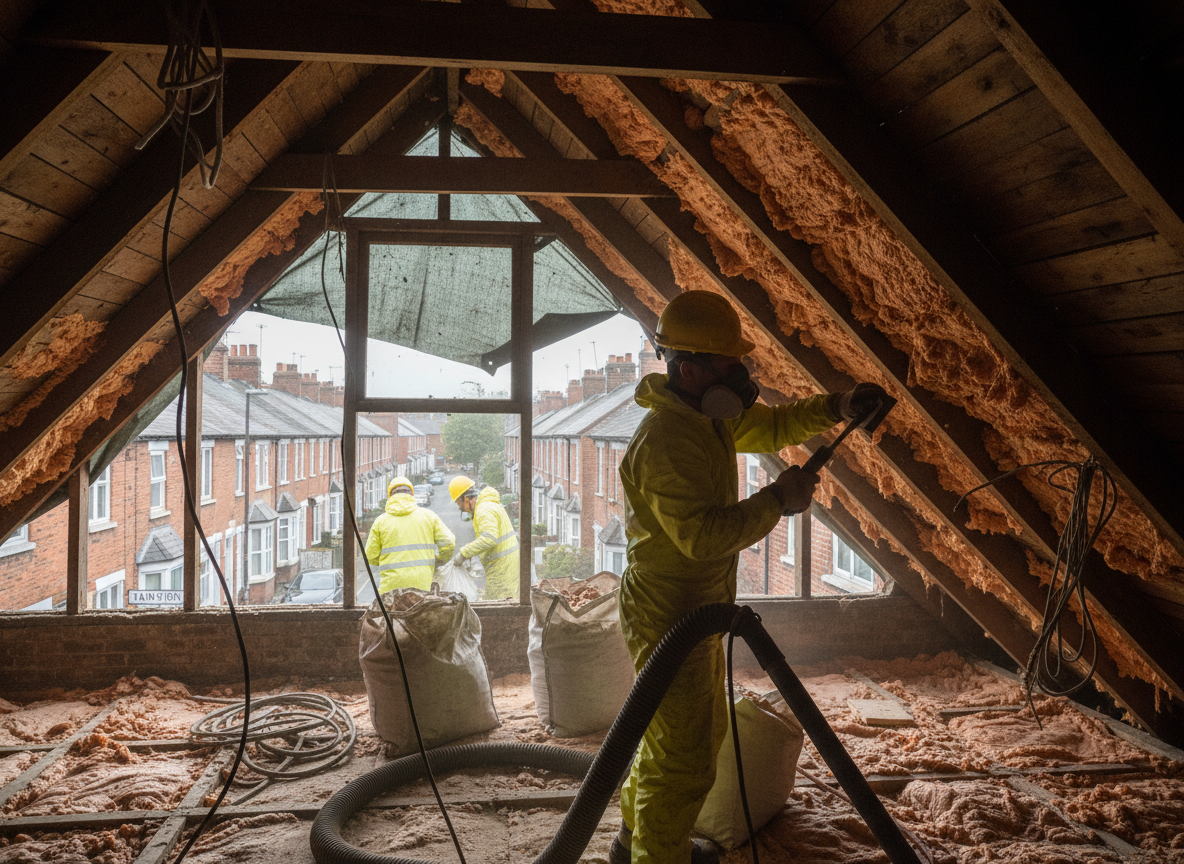
Spray foam removal from older terraced houses in Taunton typically takes 2 to 5 days depending on loft size and foam depth, with full access and ventilation restoration required before any re-insulation work begins. These Victorian and Edwardian terraces along roads like Staplegrove Road often feature narrow roof voids and solid masonry walls that trap moisture once foam breaks down. Local conditions in the Taunton area, including frequent rainfall and older timber joists, mean crews must prioritise moisture checks and controlled demolition to avoid structural damage. Properties built before 1920 in central Taunton neighbourhoods commonly hold 150 mm to 300 mm of closed-cell foam applied in the 2000s, which now fails mortgage surveys.
Assessment Challenges in Taunton Terraces
Older terraces in Taunton present tight access routes through shared chimneys and party walls that limit equipment movement. An insulation assessment first maps foam type, thickness and any timber rot caused by trapped condensation. Crews check for original lath and plaster ceilings that can collapse under vibration from removal tools. In streets near Taunton town centre, narrow ginnels restrict skip placement, so teams schedule smaller daily waste removal runs. Hidden electrical cables and gas pipes running through loft spaces add extra mapping time before work starts.
Removal Techniques for Solid-Wall Terraces
Dry ice blasting works well on closed-cell foam bonded to rafters in Taunton's older stock because it minimises dust in confined lofts. Sand blasting follows on stubborn patches but requires full floor protection to avoid damaging original floorboards below. For open-cell foam common in 1930s terraces near Wellington Road, manual scraping combined with thermal methods prevents tearing of fragile ceiling laths. All waste leaves the site segregated for recycling, and lofts receive a final HEPA vacuum before handover. loft spray foam removal teams often combine these steps when properties sit on sloping sites typical of the Quantock foothills.
Impact of Somerset Weather Patterns
Taunton's wet winters mean removal projects pause when humidity exceeds 85 percent to prevent new condensation forming on exposed timbers. timing spray foam removal around Tauntons wet weather shows that spring and early autumn slots reduce drying times after foam extraction. Persistent rain can also saturate external walls of end-of-terrace houses, so teams install temporary vapour barriers during multi-day jobs. Properties near the River Tone floodplain require extra drainage checks once insulation is gone.
Cost Factors Specific to Older Housing
Labour rates rise in Taunton terraces because of restricted working hours to respect neighbours and the need for scaffolding on three-storey rows. what affects spray foam removal costs in Taunton Somerset outlines how foam depth over 200 mm and shared loft access add 20 to 30 percent to standard quotes. Disposal fees for older urea-formaldehyde foams found in some pre-1980 terraces further increase totals. Homeowners receive itemised breakdowns covering access equipment, waste tonnage and post-removal ventilation upgrades.
Post-Removal Steps and Re-Insulation Options
After foam clearance, an insulation assessment confirms joist condition and ventilation adequacy before any new material is considered. Many Taunton owners choose breathable alternatives such as wood fibre boards to suit the solid-wall construction of their terraces. insulation assessment reports also flag any remaining damp patches around chimney breasts common in local Victorian builds. Final walkthroughs include neighbour courtesy visits to confirm shared walls remain undisturbed.