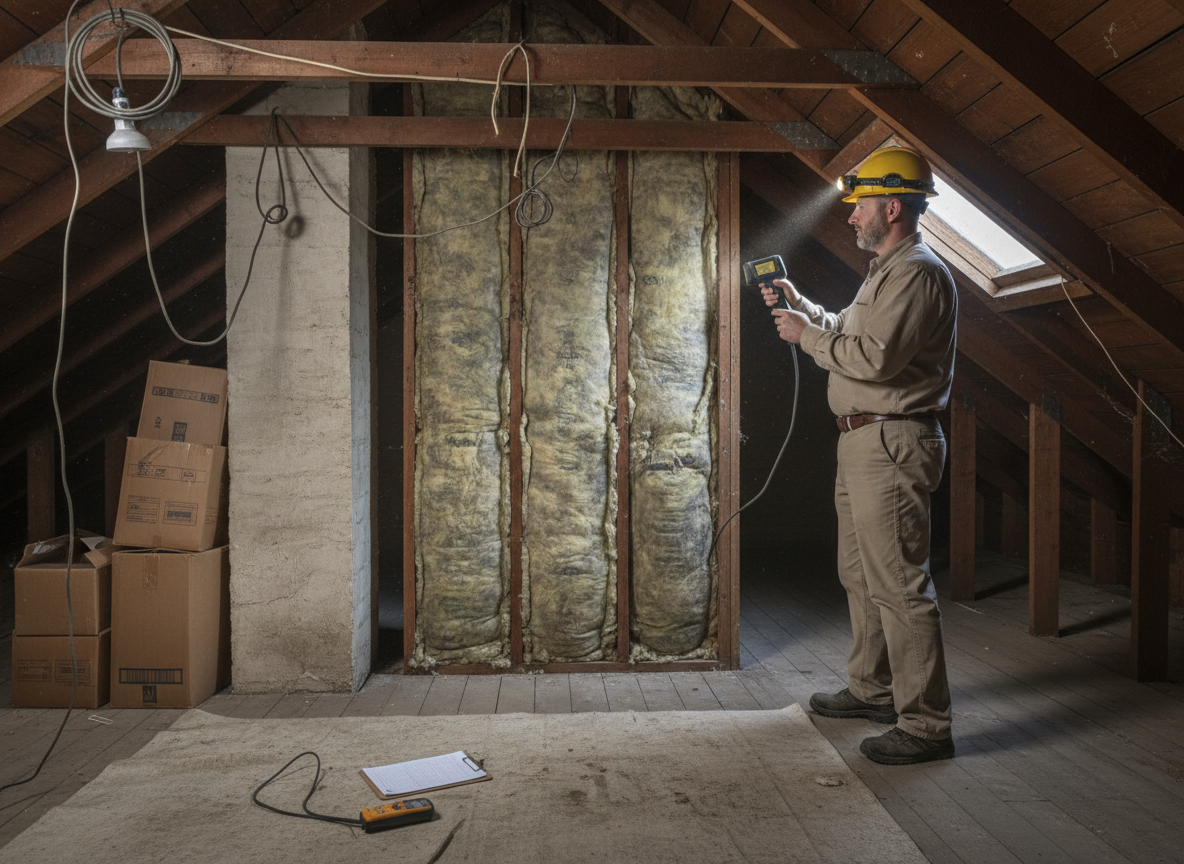
In Taunton and the surrounding Somerset countryside, many homes from the Victorian and Edwardian eras feature solid walls and original roof spaces that were later fitted with spray foam insulation. An insulation assessment starts with checking how the foam interacts with existing timber joists and slate roofs, which are common in the TA1 postcode area. Moisture from the nearby River Tone and frequent autumn rainfall can become trapped behind the foam, leading to hidden rot that only shows up once the material is disturbed. Proper assessment also looks at ventilation paths around chimneys and loft hatches to avoid creating new damp problems during any later removal work.
Edge cases in the Taunton area often involve properties near the Quantock Hills where wind-driven rain increases the risk of water ingress at roof edges. Assessors examine the foam's adhesion to plasterboard ceilings and whether it has been applied over electrical cables or pipework, both frequent findings in 1930s semis around Staplegrove and Wilton. Local building practices sometimes left minimal roof space, so the assessment records insulation depth and any compression of original rafters. Notes are made on whether the foam meets current ventilation standards, because non-compliant installations can affect mortgage surveys and future sales in the Taunton market.
Homeowners in Taunton often discover that spray foam was installed without addressing existing leaks around dormer windows or valley gutters. The assessment includes checking for signs of mould growth on the underside of the foam and measuring humidity levels in the loft. This step is essential before any removal because disturbing the material in poorly ventilated spaces can release particles into living areas below. The process also flags properties where the foam bridges the wall plate, a detail that changes how removal crews protect the masonry in older terraced houses along the A38 corridor.
Technician insight
In Taunton, the thing that catches most people out with insulation assessment is how often spray foam was sprayed straight over old leaking valley gutters on Victorian terraces around the town centre. The foam hides the water for years until you open it up, and then the rot runs right along the wall plate. Homeowners assume a quick look will do, but you have to lift every board and check the full run of the gutter line.
Hidden Rot Behind Foam in a Wilton Terrace
A homeowner in a 1900s terrace near Wilton called after noticing a musty smell in the upstairs bedroom. The assessment found spray foam had been applied over a slow leak at the rear valley gutter. Once sections were lifted, the wall plate showed active wet rot extending two metres along the party wall. Removal was planned with temporary propping and new timber replacement before the foam could be taken out safely.
How it works
- 1
Site Walkthrough
Walk every accessible loft, roof void and wall cavity in the Taunton property while noting foam coverage, thickness and any visible water staining.
- 2
Moisture and Ventilation Check
Use moisture meters and visual inspection to record humidity levels and airflow around the foam, especially in homes near the River Tone.
- 3
Risk Mapping
Document locations where foam contacts electrics, pipework or timber and flag any areas that will require extra protection during removal.
- 4
Written Report
Provide a clear summary of findings with photographs and recommendations tailored to the age and construction of the specific Taunton building.
Pricing
Upfront quotes given after the assessment visit, based on property size and access conditions in Taunton.