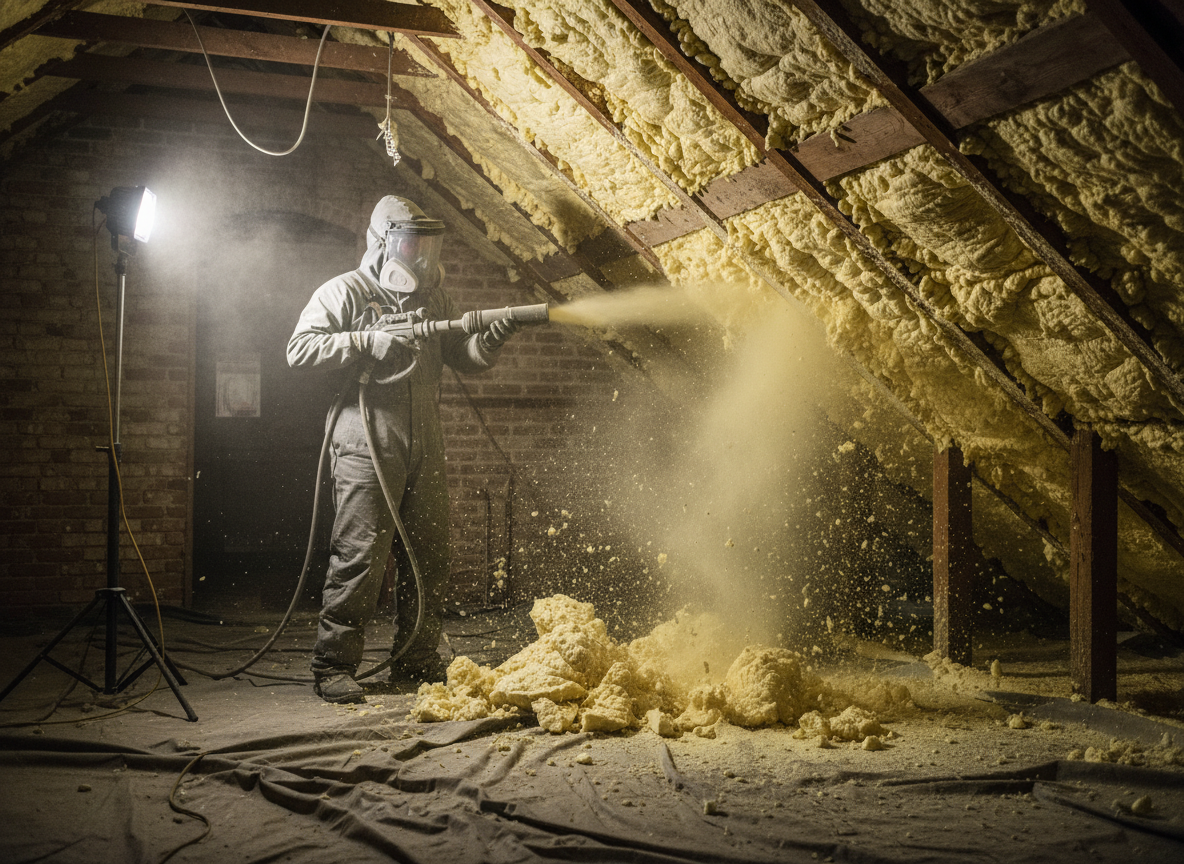
Sand blasting removes rigid spray foam from rafters, wall cavities and underfloor voids without tearing out original timber or plaster. In Taunton’s older stone and brick properties the foam often bonds tightly to lime mortar joints, so operators must dial back pressure and use fine media to prevent surface damage. Dust extraction units with HEPA filters are essential because Staplegrove and central Taunton homes sit close together and neighbours notice fine particles quickly.
Somerset’s damp winters mean residual moisture can linger behind foam layers. Before blasting begins, moisture meters check joists and wall plates; any readings above 18 % trigger extra drying time. Crews also seal off chimney breasts and service entries common in Victorian terraces around Taunton to stop media escaping into living spaces.
After blasting, all spent media and foam debris are vacuumed through sealed chutes into skips positioned on the driveway. Final inspection includes a borescope check of hidden voids behind lathe and plaster ceilings to confirm no foam islands remain that could later cause condensation issues.
Post-Removal Checks
Homeowners should allow at least 48 hours of ventilation after sand blasting before re-insulating. In the Taunton area this often means timing the job for drier spells between October and March when external humidity is lower.
Technician insight
In Taunton the thing that catches most people out with sand blasting spray foam insulation removal is the high water table around the River Tone and the Levels; older Staplegrove properties often have hidden damp in the sole plates that only shows once the foam is gone, forcing an extra drying period before any new insulation goes back in.
Victorian Terrace Loft, Taunton
Homeowner reported musty smells in a 1900s terrace near the town centre. Inspection found closed-cell foam trapping moisture against original rafters. Sand blasting cleared the foam in two days; debris was removed via external chute and the roof space was left ventilated. Follow-up visit confirmed joists had dried to safe levels.
How it works
- 1
Site Assessment
Technicians inspect the property at 100 Staplegrove Rd base before travelling to the job, checking access, cavity depth and any asbestos risk in pre-1980 Taunton homes.
- 2
Containment Setup
Plastic sheeting and negative-air machines isolate the work zone to protect adjacent rooms and neighbouring properties common in dense Somerset streets.
- 3
Controlled Blasting
Fine crushed glass or soda media is applied at low pressure, working in sections to avoid overheating timber joists typical in local roof structures.
- 4
Debris Removal and Clean
Industrial vacuums extract all residue, followed by a final wipe-down and moisture check before handover.
Pricing
Cost depends on access difficulty, depth of foam and property age; call 24/7 for a site visit and written quote from our Staplegrove Road base.