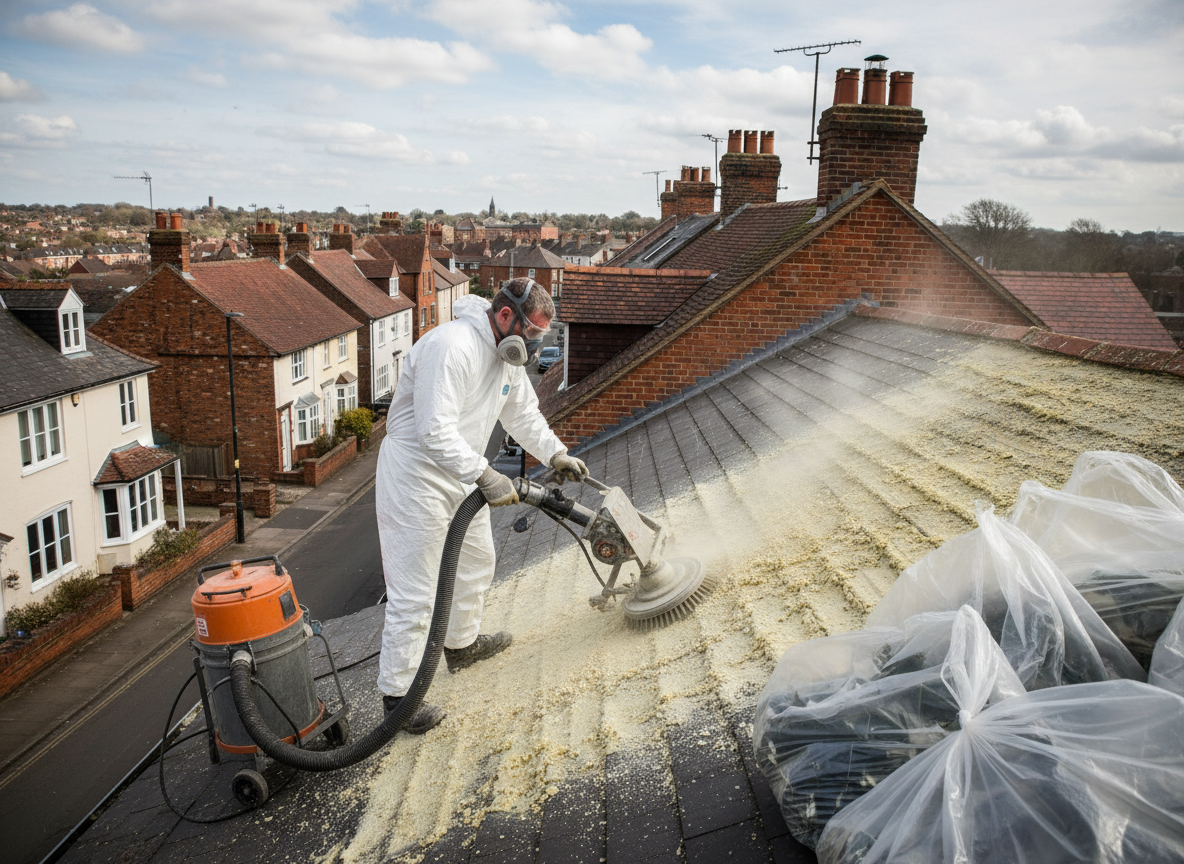
Roof spray foam removal in Taunton often involves older Victorian and Edwardian terraces with slate roofs that sit directly on battens without modern underlays. The foam bonds tightly to the underside of slates and into the gaps between timber rafters, so pulling it free risks cracking slates or dislodging ridge tiles that are already weathered by decades of Somerset rain. Crews start by checking for hidden rot in the rafters caused by the foam trapping moisture against the timber, especially in north-facing roofs that stay damp longest.
In Staplegrove and similar Taunton streets the housing stock includes many 1920s and 1930s semis where spray foam was added later to cut heating costs. These roofs frequently have narrow eaves and limited loft access, making containment sheeting and negative-air machines essential to stop foam dust drifting into bedrooms below. Removal teams also watch for lead flashing around chimneys; disturbing it during foam extraction can create leaks that only show once winter rain arrives.
Somerset’s high rainfall means any remaining foam residue can hold water against the roof deck long after the job finishes. Experienced operators therefore finish by brushing down rafters and checking ventilation paths so the roof can dry properly. In properties near the river Tone the added humidity makes this drying step slower, so extra time is allowed before insulation or boarding is replaced.
Technician insight
In Taunton the thing that catches most people out with roof spray foam removal is how often the foam was sprayed straight onto the back of slate in 1930s semis around Staplegrove Road; the frequent Somerset rain drives moisture under the slates and the foam holds it there, so you have to strip more carefully than the homeowner expects or you leave hidden damp pockets.
1930s Semi in Staplegrove
Homeowner noticed damp patches on bedroom ceilings after heavy winter rain. Inspection found spray foam still clinging to rafters and trapping moisture against the slate. We removed the foam in sections, brushed the timber, and opened up the eaves for airflow. Ceilings stayed dry through the next wet season.
How it works
- 1
Site Inspection
Assess roof construction, foam depth, and any timber damage from the address in Taunton.
- 2
Containment Setup
Install dust barriers and extraction equipment to protect living spaces below.
- 3
Foam Extraction
Mechanically remove foam from rafters and slate undersides without damaging the roof covering.
- 4
Final Clean and Check
Clear residue, inspect for moisture, and confirm ventilation paths are clear.
Pricing
Cost depends on roof size, foam thickness and access; call for an on-site assessment.