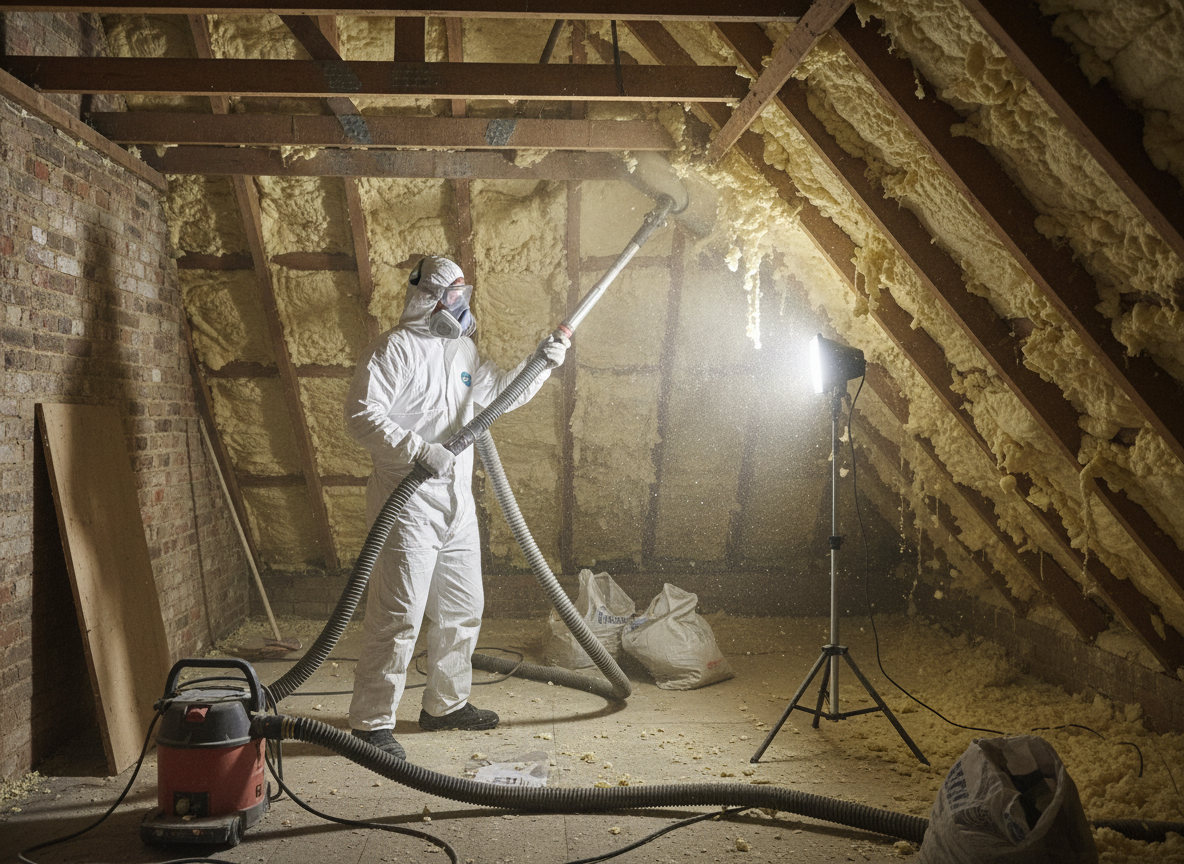
Taunton's Victorian terraces and Edwardian semis often feature spray foam applied directly to lath and plaster or between exposed rafters under slate roofs. Removing it requires careful separation to avoid disturbing original ceiling structures or dislodging insulation debris into living spaces below. Somerset's frequent winter rainfall and high humidity can leave residual moisture trapped against timbers, increasing the risk of rot if the foam is not fully extracted and the void properly ventilated afterward.
Edge cases common in the Taunton area include foam that has migrated into eaves and party walls during previous installations, requiring targeted probing with inspection cameras before cutting begins. Older properties near the River Tone may also show signs of previous damp ingress that has altered foam adhesion, demanding slower mechanical removal rather than aggressive scraping. Regulations around waste disposal in Somerset mean all removed material must be bagged and taken to licensed sites rather than left on site.
Homeowners sometimes attempt DIY removal using basic tools, which frequently leaves thin layers of foam bonded to joists that later cause condensation issues. Professional crews use layered containment sheeting and negative air machines to keep dust from settling on floorboards or entering downstairs rooms, a step that proves essential in compact Taunton terraces where access is limited to narrow loft hatches.
Technician insight
In Taunton, the thing that catches most people out with Attic spray foam removal is how often the foam was sprayed over the top of existing mineral wool in 1960s-70s semis around the Staplegrove and Priorswood edges. The double layer traps moisture against the original ceiling, and the damp winters here make the lower layer turn to a sticky mess that pulls plaster off if you rush the job.
Hidden foam in a Staplegrove terrace
Homeowner in a 1930s terrace near Staplegrove Road reported musty smells after heavy rain. Inspection found spray foam covering older mineral wool that had soaked up water from a slipped slate. We removed both layers in sections, dried the joists and left the space ventilated. The smell cleared and no further damp appeared.
How it works
- 1
Initial Inspection
Survey the attic from the access hatch, checking foam depth, adhesion to rafters and any signs of damp in Taunton's older stock.
- 2
Containment Setup
Install floor protection and negative air filtration to prevent dust migration into living areas below.
- 3
Mechanical Removal
Cut and peel foam in sections, working around timber joists without damaging original lath and plaster ceilings.
- 4
Clean and Ventilate
Remove residue, vacuum loose particles and ensure the space is aired to address Somerset moisture levels.
Pricing
Cost depends on attic size, foam thickness and access difficulty in older Taunton homes; upfront quotes provided after inspection.